6 Mindset Shifts on Resilience from a Marine Who Survived 3 Clinical Deaths and 70+ Surgeries
- Introduction: The Distinction Between Being Tired and Being Defeated
When a carefully engineered life collapses not merely stalling or growing difficult, but disappearing entirely, the conventional playbook of positive thinking quickly reveals its limits.
Whether triggered by catastrophic health diagnoses, sudden financial collapse, or broken marriages, extreme adversity creates a bone-deep exhaustion. People find themselves stranded in unfamiliar territory, quietly asking how much more weight they can carry before breaking.
On an episode of the Warriors Haven Podcast, host Jeshia Sutherland a former Army drill sergeant sat down with Marine Corps veteran, entrepreneur, and author Jay Setchell.
Setchell’s life story reads like a case study in human endurance: he has survived three clinical deaths, over 70 surgeries, quadriplegic paralysis following a neck fracture on July 4, 1981, and three divorces. Yet, rather than allowing these events to truncate his trajectory, Sitchell built successful enterprises, raised a family, authored
The Strength Within You, and forged an unshakeable sense of daily purpose.
True resilience is not high-sounding optimism or pretending that agony does not exist. It is an operational framework for processing pain, maintaining cognitive clarity, and executing critical decisions when every original plan has been incinerated. Setchell’s tactical experience offers six core mindset shifts for navigating radical life disruption when outcomes fall far short of expectations.
- Takeaway 1: Defeat Is an Acceptance, Not an Inevitability
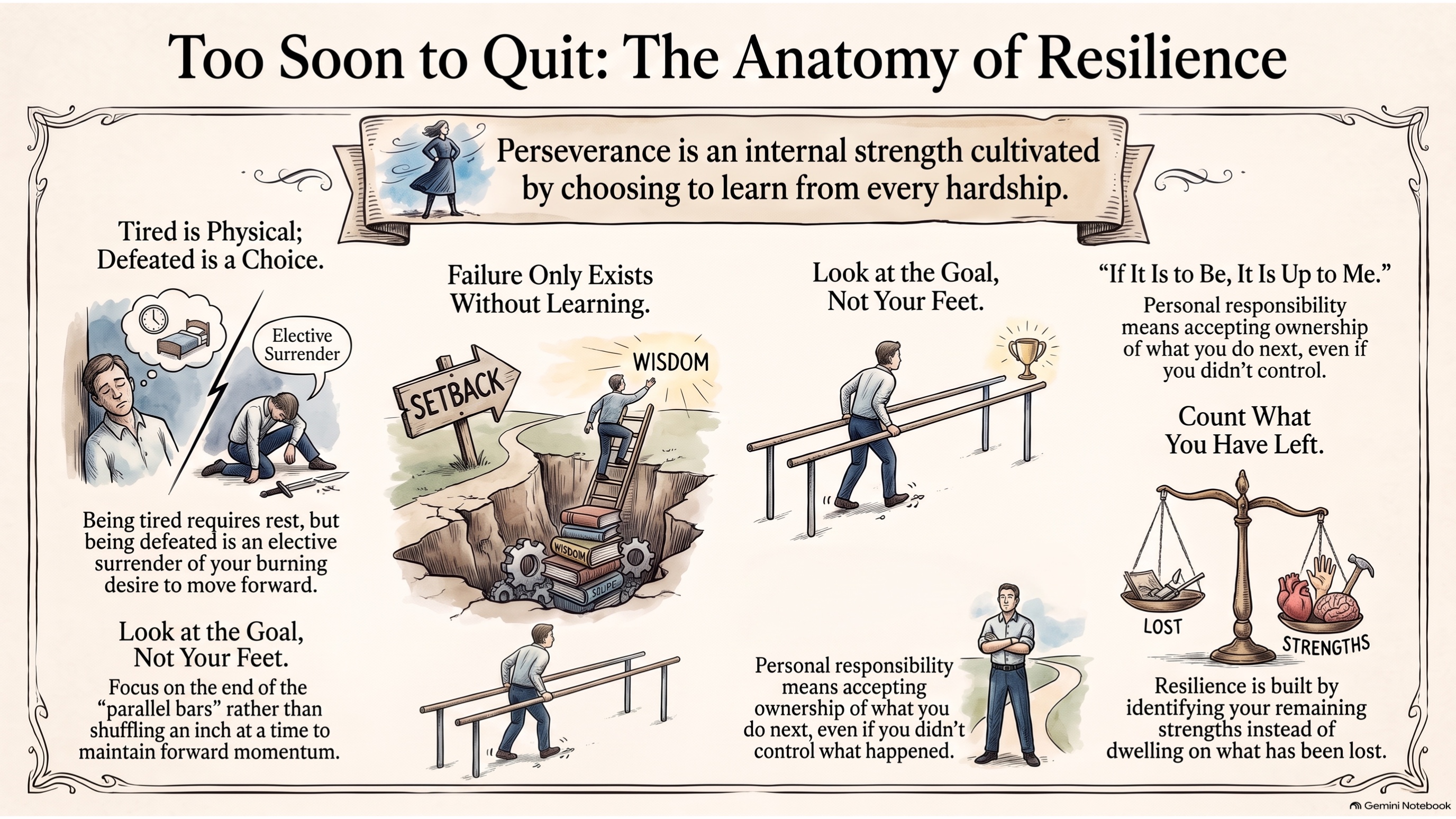
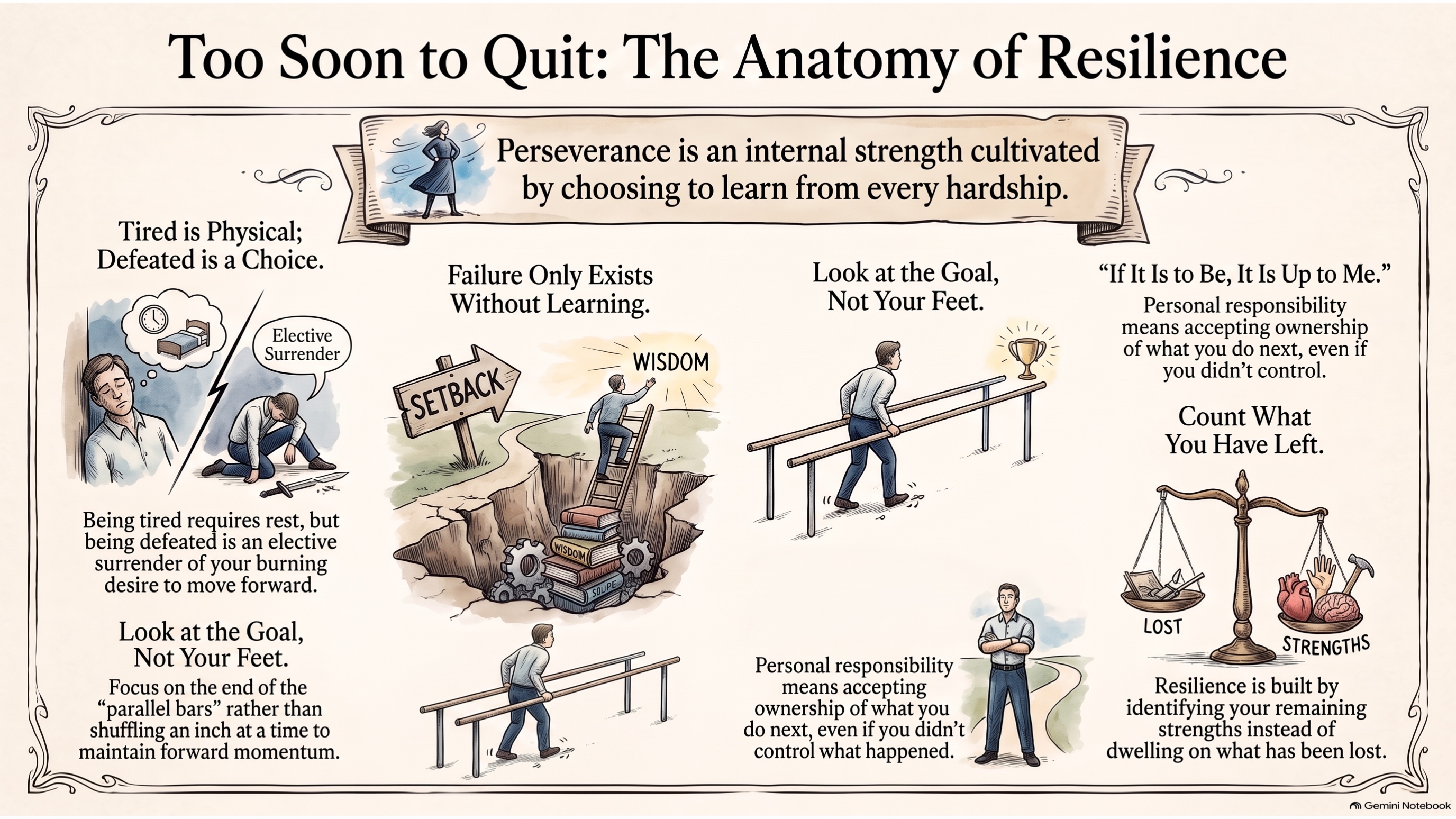
Setchell draws an uncompromising line between physical fatigue and mental defeat. Fatigue is a natural physiological reaction to relentless stress and strain a signal that the body requires rest, recovery, and recalibration. Defeat, by contrast, is not a mandatory physical state; it is a conscious mental choice to surrender. In Setchell’s operating system, quitting is an optional posture that an individual can simply refuse to adopt.
Crucial to this performance model is a total re-engineering of how we evaluate failure. Setchell strips failure of its emotional weight by defining it strictly through an educational lens. A setback or crisis only consolidates into actual failure if you walk away without extracting actionable intelligence from it.
If you analyze the breach and capture the lesson, the setback ceases to be a failure and converts directly into internal leverage, strategic wisdom, and raw fortitude for future engagements.
“Defeat doesn’t define failure. Failure is when you’ve not learned anything from it… If I’ve learned something, then it’s not a failure.”
Stripping failure of its identity-level shame fundamentally changes executive decision-making under stress. When negative outcomes are parsed as objective operational data rather than reflections of personal capability, the psychological paralysis of mistake-making evaporates, leaving behind a clean, internal capacity for relentless forward momentum.
- Takeaway 2: The “10,432nd Tap” Rule of Perseverance
To demonstrate how continuous, unglamorous effort generates sudden breakthroughs, Setchell points to the story of Ted Geisel. Early in his career, Geisel submitted his manuscript to 22 separate publishers, receiving flat rejections from every single one. Rather than abandoning his vocation, he pivoted, adopted his mother’s maiden name—becoming Dr. Seuss—and subsequently built one of the most celebrated publishing legacies in modern history.
Setchell reinforces this reality with the striking image of a master sculptor shaping a block of marble with a wooden mallet and chisel. The artisan strikes the stone thousands of times to reveal the underlying form. On the 10,432nd tap, a final unwanted chunk of stone flakes away perfectly, revealing the masterpiece inside.
Was it the 10,432nd tap alone that yielded the breakthrough? Or was it the 10,314th? The final outcome required the uncompromising compound force of every single strike delivered from the very beginning.
Evaluating personal progress purely through immediate, visible feedback leads high achievers to abandon critical missions prematurely. Because no one can predict which specific attempt will break the underlying stone, understanding that every unrewarded strike builds structural pressure prevents you from walking away right before your breakthrough tap.
- Takeaway 3: Disarm Fear with Three Strategic Questions
Fear is an unavoidable reality of the human condition. Setchell treats fear as an inevitable natural force, comparing it to aging or the sun rising in the east: attempting to dodge or eliminate it is a waste of vital energy. The strategic response to fear is never avoidance, but direct engagement backed by wisdom earned through experience.
When paralysis threatens to block a high-stakes initiative or daunting life pivot, Setchell disarms the emotional noise by subjecting the decision to three diagnostic questions:
Why do you want to do it?
Who’s it gonna benefit?
How’s it gonna benefit?
Fear and hesitation thrive in the echo chamber of internal anxiety, self-preservation, and catastrophic forecasting. Systematically answering these three practical questions forces the mind out of internal worry and locks it onto external service and tangible utility, cleanly cutting through indecision.
- Takeaway 4: Rebuild Identity by Counting What You Have Left
Catastrophic life shifts almost always trigger a crisis of identity, whether caused by the loss of a career, physical capability, a marriage, or military service.
Setchell confronted this void when an injury during his Marine Corps tenure obliterated his lifelong plan to operate a large farm and fly aircraft. Years later, his neck fracture left him paralyzed from the shoulders down, stripping away his physical independence in an instant.
Rebuilding a functional identity required Setchell to halt all emotional fixation on lost assets and conduct a rigorous inventory of remaining capabilities.
Despite lacking leg function, possessing no right-hand grip, and living with a fused left wrist, Setchell adapted. When moving heavy inventory, he uses his motorized wheelchair on low speed like a bulldozer to clear 85- to 100-pound boxes, guiding the vehicle with a specialized T-post joystick fitted for his compromised hands.
“No matter what you’ve got, count what you got left, not what you lost.”
Emotional paralysis is prolonged by mourning retired versions of ourselves and fixating on absent resources.
Constructing a high-performance identity out of crisis demands that you stop measuring the gap between yesterday and today, aggressively mobilizing whatever tools, cognitive power, and operational capacity remain in your possession right now.
- Takeaway 5: Stop Looking at Your Feet—Focus on the Destination
During his rehabilitation in spinal injury units, Setchell spent months observing patients attempting to relearn how to walk using parallel bars. He identified a consistent behavioral error: almost every patient kept their eyes locked downward, obsessing over their hands and feet as they shuffled forward a fraction of an inch at a time.
When Setchell took his turn on the parallel bars—his non-functional right hand physically wrapped and secured to the steel rail with an Ace bandage so it wouldn’t slip off—he chose an entirely different focal point. Ignoring his non-responsive feet, he fixed his gaze entirely on the far end of the bar, 10 to 12 feet away. Locking onto the destination provided the neurological drive necessary to conquer the distance.
Micro-managing immediate discomfort creates immense psychological drag. When you stare continuously at the pain of micro-steps, every inch feels agonizing. Locking your sights onto the ultimate objective provides the high-level perspective required to pull your body through present discomfort.
- Takeaway 6: Discipline Is the True Engine of Motivation
A widespread misconception surrounding high performers is that they operate on high levels of daily motivation. Sitchell dispels this notion, identifying reliance on emotional readiness as a fundamental design flaw.
Supported by Jeshia Sutherland’s tactical background as an Army drill sergeant, Setchell argues that motivation does not generate discipline. Rather, disciplined routine, adherence to standards, and daily stick-to-it-iveness build forward momentum. That momentum then generates sustained motivation and self-confidence as a byproduct.
Waiting for an emotional green light before taking decisive action guarantees stagnation. Implementing structured daily habits and relying on cold discipline ensures relentless execution regardless of fluctuating mood or energy levels.
- Conclusion: The Five-Foot Rule and What Happens Next
Life rarely requests permission before disrupting hard-won plans, personal health, or established careers. While you cannot always govern external shocks, you retain absolute ownership over your immediate next decision. Rebuilding does not require solving an entire decade of complexity in an afternoon; it simply requires moving forward five feet—or even an inch—at a time.
Resilience is not a vague character trait, but an active discipline of auditing remaining assets, executing daily routines, seeking support when needed, and keeping your eyes anchored on the objective.
What step do you need to take today using what you have left, rather than fixating on what you have lost?